Boiling Spring Lakes Dam Refilling: Why Three Lakes Wait
August 20, 2026
August 20, 2026
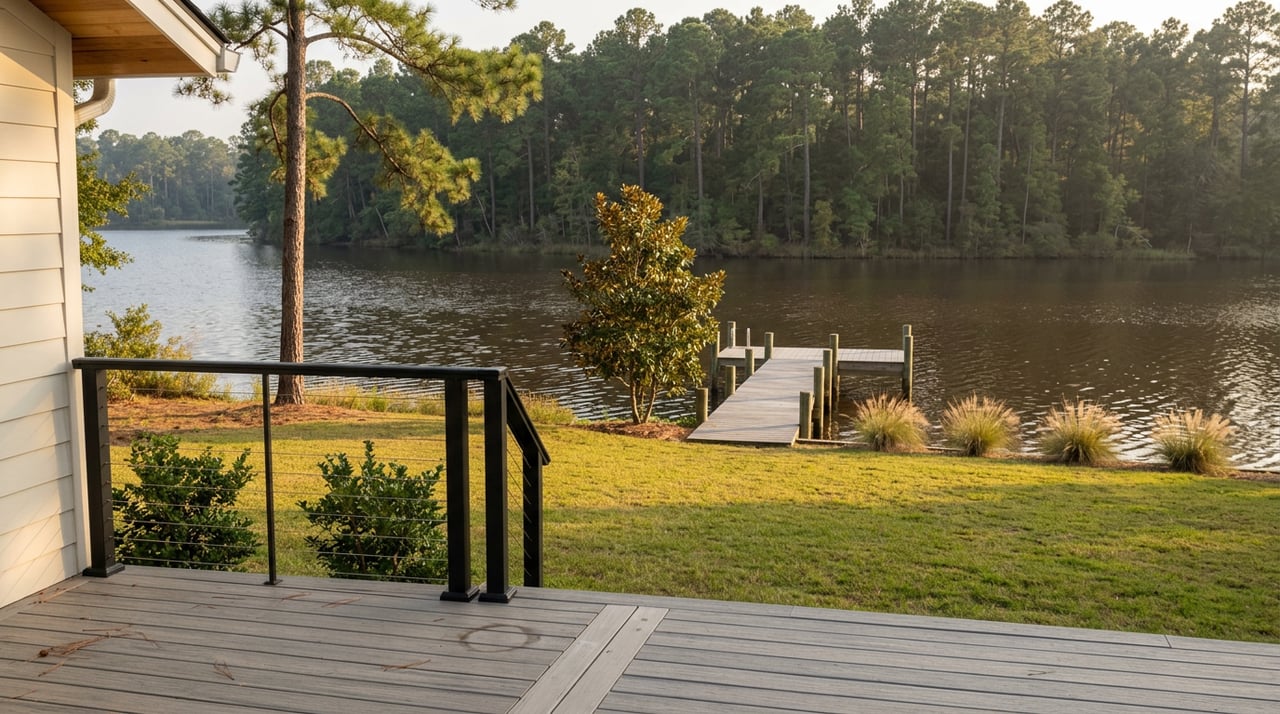
Drive past Upper Lake on Boiling Spring Lakes Road this month and you will notice something that has not been true in almost eight years: there is water where there used to be sand, stumps and scrub grass. It is not much yet. But it is rising, week by week, and city crews have been out checking the shoreline buffer to make sure it keeps doing exactly that.
For anyone who has lived here since 2018, the moment is worth pausing on, because the town's name has been something of an inside joke for almost eight years. Hurricane Florence breached the dam system in September of that year, and the water that made Boiling Spring Lakes an actual collection of lakes drained out and never came back on its own. What is happening right now is the first real reversal of that. But if you assume the whole system is about to snap back to normal by fall, the timeline says otherwise, and understanding why is more interesting than the headline itself.
The mechanical detail matters here. On July 21, city officials closed the gate valve on the Upper, or Allen Creek, Dam, following a final inspection. The next day, the North Carolina Department of Environmental Quality's Dam Safety Program issued a Certificate of Final Approval, certifying that the area upstream of that dam can legally be impounded again. City Manager Matt Kirkland described what residents should expect to see as a result: the water level starting to rise as the lake refills, with public works crews inspecting the dam, the shoreline buffer and the lake bed as the process continues.
That is a technical way of saying the town cleared a regulatory hurdle it has been chasing for years, and now physics and weather take over. Officials have said it will likely take several weeks for Upper Lake to fill completely, faster if it rains, slower if it doesn't.
Here is the part that gets lost when a milestone like this makes the news: Upper Lake is one piece of a four-dam restoration, and it is the smallest one to finish. The city's own account of where things stand looks like this:
Mayor Jeff Winecoff put the whole project in personal terms when the certification came through. "We're Boiling Spring Lakes, and we need our lakes back," he said, describing the years of work as an effort to make the city whole again for families who have lived here a long time. Resident Ronnie Ratliffe called the approval welcome news for the neighborhood, which is probably the most accurate one-line summary of how most people who have watched an empty lakebed for eight years are likely to feel about it.
The practical takeaway is that "the lakes are coming back" is true, but it is a 2027 story, not a Labor Day story. Upper Lake filling this year does not mean Pine Lake or Sanford Lake will look any different by October.
There is a wrinkle in the refill timeline that is easy to miss if you only skim the headlines. The lakes are refilling through what officials describe as natural processes, primarily rainfall. At the same time, Brunswick County has issued a Stage 3 Water Shortage Warning, putting mandatory restrictions in place that ban automated irrigation and raise fees for non-compliance.
Put those two facts side by side and the tension is obvious. The same dry stretch that is triggering sprinkler bans across the county is also the variable most likely to slow how fast Upper Lake actually fills. Kirkland has acknowledged as much, noting that the city's dams have absorbed repeated damage, first from Hurricane Florence in 2018, then from Tropical Storm Eight, and now from an ongoing drought that could stretch out the refill timeline even though it does not threaten to stop it. If you are wondering why your neighbor's lawn looks stressed at the same time the city is celebrating rising water levels a few streets over, that is the answer. It is the same weather pattern working two different angles on the same town.
Not every lake in the system is expected to return to its old footprint. According to the city's own engineering guidance, Pine Lake, North Lake and Patricia Lake, the stretch east of NC 87, are designed to return to pre-Florence water levels once their respective dams are complete. But state officials have also noted that some areas will not fully match their old boundaries. In sections where the shoreline has had years to settle into a new equilibrium, the water's edge could end up sitting 25 to 30 feet back from where it stood before the storm.
That is a useful detail for anyone who spent the last several years watching sand fill in where a dock used to be. The lake is coming back. The exact line where water meets land in a few spots may not be identical to the one you remember from 2018.
The dry years left their mark beyond the lakebed itself. In 2023, with a $20 million credit line secured through a bond referendum and additional grant dollars pledged toward the repair project, Boiling Spring Lakes had, for the first time since the storm, a real funding path forward. WilmingtonBiz covered the moment, and one detail from that reporting is worth repeating here because it captures how strange the intervening years actually were for people living on what used to be waterfront: local agents spent years debating how to even market a home as "lakefront" when there was no lake to see from the porch. Hank Troscianiec, who has worked this market for years, told the publication at the time that buyers were largely making decisions on the belief the lakes would eventually return, and that the real estate community shared that belief. Another local agent, Todd Derksen, noted that a number of lakefront owners simply gave up and sold during the dry stretch. Not everyone did. Tyler Crenshaw relocated his family to a private "waterfront" fixer-upper on North Shore Drive in January 2022, dry backyard and all, because he had been through a similarly protracted dam rebuild before and knew the drill.
That history is worth knowing not because it changes anything about buying or selling today, but because it explains why this summer's rising water level carries more weight in town than a routine infrastructure update usually would. People have been waiting on this specific outcome for a specific reason for eight years.
If you want to see the change in person rather than take it on faith, Spring Lake Park on Pine Road remains the easiest spot to do it. It is the site of the Spring Lake Concert Series, which brought out the Parrot Party Duo earlier this month, and the same park hosts the city's water aerobics classes and the Boiling Spring Lakes Police Department's Small Fry Fishing Tournament. Its boat launch is set up for kayaks and small electric craft if you would rather get out on the water than just look at it from the bank.
None of that changes because Upper Lake is a few miles away and still filling. But it is a good reminder that even mid-repair, the town's lake culture, the swimming, the summer concerts, the kids' fishing tournament, never fully stopped. It just adapted to a smaller footprint while the bigger project caught up.
Eight years is a long time to wait on a gate valve. The fact that one has finally closed, with three more still ahead, is worth noticing, and worth getting right when you talk about it with a neighbor who has been watching just as closely as you have.
If you are curious how the return of the lakes is shaping conversations about property in town, or you just want a straight answer from someone who has followed this project since before the bond referendum, the team at Hank Troscianiec & Associates is happy to talk it through. Schedule a Free Consultation whenever you are ready.


Neighborhood Events
We pride ourselves in providing personalized solutions that bring our clients closer to their dream properties and enhance their long-term wealth. Contact us today to find out how we can be of assistance to you!