Leave a Message

Thank you for your message. We will be in touch with you shortly.

How We Price Canal And Oceanfront Homes On Oak Island

December 4, 2025

If you have a canal or oceanfront home on Oak Island, you already know that two houses a few doors apart can sell for very different prices. View, elevation, dockage, and even permitting history can swing value in a big way. You deserve a clear method, not guesswork. In this guide, you will see exactly how we analyze comps, flood risk, docks and seawalls, rental income, and local rules to price waterfront property with confidence. Let’s dive in.

Oceanfront vs canal: who buys and why it matters

Oceanfront homes attract buyers who prioritize an unobstructed view, direct beach access, and a premium coastal lifestyle. Canal homes often appeal to boaters who want protected water, dockage, and quick access to the Intracoastal. Each group values different features, which changes how we position your home and where we pull comps. Pricing starts with matching your property to the right buyer pool and micro-market on Oak Island.

The top value drivers we analyze

Location and view

Direct oceanfront with a wide, unobstructed view typically carries a premium. On canals, we look at how quickly and easily a boat reaches open water, tidal depth, and whether bridge clearances limit boat height. We match comps within the same stretch of beach or the same canal branch because micro-markets vary block by block. We also note proximity to public access points, marinas, and services.

Elevation and flood zone

Flood risk is a major pricing lever. We confirm your FEMA Flood Insurance Rate Map zone and finished-floor elevation, ideally with an Elevation Certificate. Properties in VE zones often face stricter requirements and higher insurance costs, which can affect buyer affordability. You can review official mapping at the FEMA Flood Map Service Center.

Water frontage and shoreline

We measure linear water frontage on canals and lot width on the ocean. Shoreline protection matters. A natural or engineered dune, or a permitted bulkhead or riprap, influences stability and perceived risk. Condition and documentation of any shoreline structure are key parts of buyer due diligence.

Dockage and boat access

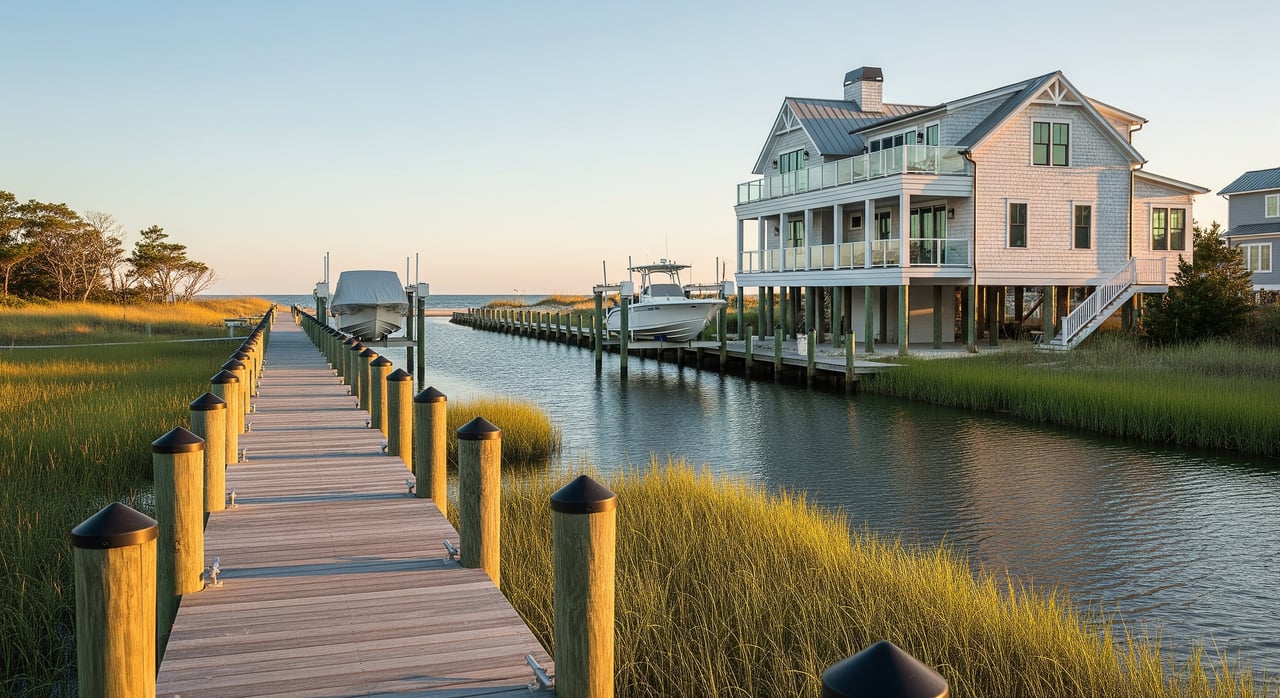
On canal homes, a permitted, well-maintained dock, boat lift, and reliable depth at mean low water increase utility and value. We verify permit history and condition and consider any fixed or lift bridges on the route to the Intracoastal that might limit boat height. For oceanfront homes, private beach access and durable walkways add appeal.

Condition and construction

Age, foundation type, and flood-resistant construction all matter on the coast. We look for updates that use coastal-grade materials, roof condition, piling integrity, and signs of moisture or salt corrosion. Recently renovated homes built to modern codes typically command higher prices.

Income potential and use

If your property operates as a vacation rental, documented income can influence value. We analyze realistic occupancy and seasonal rates and may use an income approach alongside sales comps when investor demand is strong. Conservative pro formas build buyer confidence during negotiations.

Permits, utilities, and rules

Waterfront changes often require permits. We confirm CAMA and town approvals for docks, seawalls, and additions. We also verify sewer versus septic and any limits on bedroom count or expansion. For local rules and beach management updates, check the Town of Oak Island and the North Carolina Division of Coastal Management.

Our step-by-step pricing process

  1. Define the subject and buyer pool
  • Identify whether the property is primarily a view-driven oceanfront home or a boating-focused canal home. Note rental use, if any.
  1. Pull the right comps
  • Use the local MLS and county records to find recent sales on the same water type and in the same micro-market. Expand the time window if sales are sparse, then time-adjust.
  1. Verify land and flood data
  • Confirm lot dimensions, frontage, and flood zone through county GIS and FEMA maps. Brunswick County’s assessor and GIS are our go-to for parcels, surveys, and sale history. Start with the Brunswick County tax assessor and GIS.
  1. Evaluate elevation and insurance impacts
  • Review Elevation Certificate and current flood and wind policies if available. Insurance premium changes can influence buyer budgets, so we monitor guidance from the North Carolina Department of Insurance.
  1. Inspect shoreline and dock features
  • Note the presence, condition, and permit status of bulkheads, docks, boat lifts, and walkways. Confirm usable depth and clearances to open water.
  1. Assess structure and materials
  • Consider age, foundation type, code compliance, and quality of coastal-grade updates. If repairs were completed, we look for invoices, permits, and photos.
  1. Consider rental income
  • For properties with rental history, reconcile income potential using documented statements and realistic seasonality. When appropriate, we supplement sales comparison with an income approach.
  1. Reconcile and present a pricing range
  • We build an adjustment grid for waterfront-specific features and reconcile multiple approaches into a clear pricing range. We explain tradeoffs and suggest a listing strategy based on seasonality and current demand.

What can raise or lower value

Attributes that often increase value

  • Direct oceanfront with unobstructed views and private access.
  • Higher finished-floor elevation with an Elevation Certificate.
  • Permitted, well-maintained dock with adequate depth on canal homes.
  • Recent renovations using coastal-grade, flood-resistant materials.
  • Documented rental history with strong occupancy and rates.
  • New or recently rebuilt seawall or restored dune.

Attributes that often decrease value

  • VE flood zone exposure with low elevation and limited mitigation.
  • Failing seawall or dock, or unpermitted shoreline structures.
  • Unpermitted additions or unclear repair history.
  • Septic constraints that limit bedrooms or future expansion.
  • Legal or practical limits to water access despite apparent frontage.

Seller checklist: documents buyers ask for

  • Recent survey showing lot lines and water frontage.
  • Elevation Certificate, if available.
  • All permits for seawalls, docks, lifts, additions, and walkovers.
  • Three years of property tax bills and current assessed value.
  • Repair and renovation invoices, permits, and photos.
  • Flood and wind policy declarations and premium history.
  • Rental statements and profit and loss if used as a short-term rental.
  • HOA or neighborhood covenants and meeting notes, if applicable.
  • Septic records or sewer connection documentation.

Taking care of these details before listing speeds up due diligence and builds buyer confidence. It can also help the appraiser support your contract price.

Buyer quick-check: red flags to review

  • Flood zone, finished-floor elevation, and any prior flood claims.
  • Seawall or bulkhead condition and documented permits.
  • Dock permits, lift capacity, depth at mean low water, and bridge clearances.
  • Septic capacity versus bedroom count and expansion plans.
  • Insurance quotes and deductibles for flood and wind coverage.
  • Verified rental data if the offer relies on income.

Timing, marketing, and negotiations

Coastal markets are seasonal, with spring and summer often drawing the largest buyer pool. For strong listings, we may price slightly more assertively at the start of peak season and pair that with premium marketing. Clear documentation, professional inspections, and strong visuals reduce uncertainty and support your price. For oceanfront, we also monitor town and federal shoreline projects because beach profile changes can affect marketability. You can track beach and dune updates at the Town of Oak Island and regional projects via the U.S. Army Corps of Engineers Wilmington District.

Verified local resources

Ready to price your waterfront home?

If you want a clear, data-backed pricing plan for your Oak Island canal or oceanfront property, we are here to help. Our team pairs neighborhood-level insight with premium marketing and reliable execution. Reach out to Hank Troscianiec and Associates to Schedule a Free Consultation.
FAQs

How much more are oceanfront homes vs canal on Oak Island?

  • The premium varies by view, elevation, frontage, and buyer demand. We determine it using direct oceanfront comps in the same micro-market and reconcile against insurance and carrying costs.

Do seawalls or bulkheads add value in Brunswick County?

  • A well-permitted, well-built seawall or bulkhead can support value by stabilizing the shoreline. A failing or unpermitted structure is a liability and often reduces offers.

How does flood insurance premium impact sale price on Oak Island?

  • Higher premiums reduce buyer affordability, which can push offers lower unless mitigation like higher elevation or better terms offsets the cost. Lenders also require coverage in flood zones.

Are canal homes easier to insure than oceanfront on Oak Island?

  • Often they can be, since some canal areas face less wave action and may be in lower flood zones. Local specifics and elevation still control the final premium.

What documents should I request before making an offer on a waterfront home?

  • Ask for a survey, Elevation Certificate, FEMA flood zone info, seawall and dock permits, insurance claims and policy history, septic records or sewer info, and recent rental statements if applicable.

Work With Us

We pride ourselves in providing personalized solutions that bring our clients closer to their dream properties and enhance their long-term wealth. Contact us today to find out how we can be of assistance to you!

Follow Us