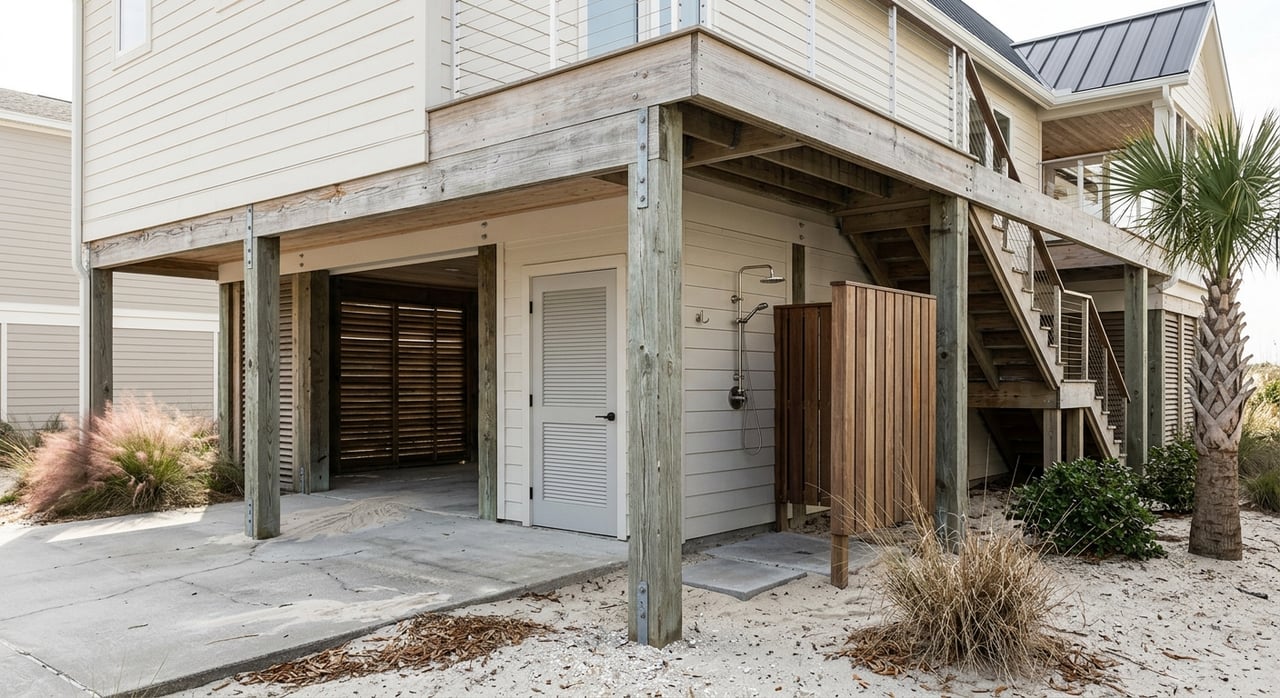
What Owning a Second Home in Brunswick Beaches Means
July 9, 2026
July 9, 2026
Dreaming about a second home at the beach is the easy part. Knowing what day-to-day ownership actually feels like in Sunset Beach and the broader Brunswick Beaches area is what helps you buy with confidence. If you are considering a place in ZIP code 28468, this guide will walk you through the real rhythm of ownership, from weather and upkeep to taxes, rentals, and local rules. Let’s dive in.
A second home in the Brunswick Beaches is shaped by the coast in ways that many inland buyers do not expect at first. Sunset Beach sits in a barrier-island setting, and that means the ownership experience is tied closely to weather, beach access, and seasonal visitor patterns.
Nearby NOAA climate normals for Southport 5 N show an annual mean temperature of 65.0°F. Average January temperatures run about 60.0°F for the high and 35.5°F for the low, while July averages reach about 91.6°F for the high and 72.8°F for the low. Annual precipitation is 54.64 inches, with wetter late-summer months in August and September.
For you as an owner, that usually means mild winters, warm shoulder seasons, and hot, humid summers. It also means your home may be most heavily used during spring, summer, and early fall, when beach activity and visitor traffic are typically at their highest.
On this stretch of coast, storm awareness is not optional. The Atlantic hurricane season runs from June 1 through November 30, with the greatest activity usually occurring from mid-August through mid-October.
If you own a second home here, you should expect to plan around that calendar every year. That can include monitoring forecasts, preparing the property before travel, arranging local check-ins, and budgeting for occasional storm-related repairs or cleanup.
This does not mean coastal ownership is a constant emergency. It simply means weather planning becomes a normal part of how you manage the home, especially if you live out of town for part of the year.
Not every second home in Sunset Beach comes with the same rules, maintenance needs, or use options. The town’s Unified Development Ordinance includes several zoning districts that shape what kinds of homes are allowed in different areas.
In the beach districts, BR-1 allows single-family and two-family dwellings, while BR-2 is for single-family residences. On the mainland, districts such as MR-1, MR-2, MR-2A, and MR-3 apply, and MR-3 allows single-family and multi-family development. The town also includes manufactured-home districts and mixed-use areas.
For you, that means a beach address alone does not tell the whole story. A detached island home, a mainland residence, or a property in a district that allows different housing types can each come with a different ownership feel and different planning considerations.
Sunset Beach actively manages property use and maintenance through local code enforcement. The town’s code-enforcement work includes property maintenance, zoning, environmental protection, public safety, rental and housing compliance, overgrown vegetation, debris, unsafe structures, nuisance conditions, and dune protection.
That matters because second-home ownership here is not just about enjoying the property when you visit. You also need to keep the home maintained during vacant periods and stay aware of local standards that affect the lot, exterior, and surrounding environment.
A beach home usually asks more of you than a similar home inland. NC State Extension recommends budgeting 1% to 3% of a home’s market value each year for maintenance and repair, inspecting the property at least every six months, and servicing HVAC equipment yearly.
That advice is especially important for a second home. If the property sits empty for stretches of time, small issues like leaks, mildew, drainage problems, or exterior wear can grow before you notice them.
A practical maintenance routine often includes:
Near the shoreline, salt exposure can speed up wear on exterior materials and mechanical systems. NC State Sea Grant notes that salt aerosols are strongest near the beach and decrease with distance from the shoreline.
For many owners, that translates into more frequent exterior cleaning and closer attention to corrosion. Railings, hardware, outdoor fixtures, and other exposed materials may need more regular inspection than they would in a non-coastal setting.
Landscaping can also require more attention. Dunes help protect low-lying coastal areas, but they are vulnerable and not a complete defense against beach recession or storm impacts, so site conditions deserve ongoing attention.
One of the biggest surprises for some second-home buyers is that standard homeowners insurance does not cover flood damage. The North Carolina Department of Insurance states that coastal property owners should consider flood insurance, especially in a coastal setting.
If the property is in a Special Flood Hazard Area and the mortgage is government-backed, flood insurance is required. NFIP policies also typically have a 30-day waiting period before coverage begins, which is why it helps to address this early rather than after a storm is on the radar.
When you build your budget, insurance should be treated as a core ownership cost, not an afterthought.
Second-home costs go well beyond the purchase price. For Brunswick County fiscal year 2025-26, the county ad valorem tax rate is 0.3420 per $100 of value. Sunset Beach lists a town property tax rate of 0.16 per $100 of value.
Because Brunswick County collects taxes for Sunset Beach on a combined bill for participating municipalities, you should look at the county and town tax burden together when estimating annual carrying costs. For many second-home buyers, this becomes one of the key numbers that shapes comfort level over the long term.
A major second-home decision is how you plan to use the property. Some owners buy mainly for personal enjoyment, while others want a hybrid plan that includes selective short-term rental periods.
In North Carolina, that choice carries real legal and financial differences. The state’s Vacation Rental Act defines a vacation rental as residential property rented for fewer than 90 days, and it requires a written vacation rental agreement with a conspicuous notice on its face.
The law also addresses deposits, rental transfer issues, and expedited eviction procedures. In other words, renting your beach home is a regulated activity, not an informal side arrangement.
If you plan to rent the property, local taxes matter. Sunset Beach states that short-term rentals of less than 90 days are subject to a 6% accommodations tax on gross rental receipts, due monthly by the 15th of the following month.
The town also notes that Airbnb and Vrbo may collect and remit lodging tax on behalf of owners or authorized agents. Separately, Brunswick County levies a 1% occupancy tax on lodging rented for less than 15 days.
These costs should be built into your income projections from the beginning. A rental plan may still make sense, but your real numbers need to account for taxes, compliance, furnishing, turnover, and maintenance.
If your second home will be used as a rental, there is another detail to know. Sunset Beach states that all furnishings, including appliances, in a rental property are subject to personal property tax.
That means your budget should reflect more than just the home itself. You may also need to plan for furniture, replacement cycles, appliance wear, and the tax treatment of those items if the property is part of a rental strategy.
Part of owning in Sunset Beach is learning the practical rules that shape beach days for you, your guests, or your renters. The town prohibits glass containers, fireworks, open fires, grills, and motor vehicles on the beach.
Shade devices must be removed by sunset, and personal property must be removed from the strand by sunset as well. The town also states that beach access is patrolled during the day, but there are no lifeguards.
Dogs are restricted on the beach from 9:00 a.m. to 6:00 p.m. from the Friday before Memorial Day through Labor Day. If pet use is important to you, that seasonal schedule should be part of your planning.
Parking rules are another sign of the area’s seasonal rhythm. Sunset Beach enforces paid parking daily from 9:00 a.m. to 5:00 p.m. from April 1 through October 31.
Parking is license-plate based and first come, first served. Sunset Beach taxpayers can register up to two vehicles for free using their parcel ID.
For owners, this matters in a few ways. It can affect your own beach routine, the guidance you give visiting family and friends, and the experience of any guests if you use the property as a vacation rental.
For many buyers, the most workable second-home strategy is a mix of personal use and selective renting. That gives you time to enjoy the property in the weeks that matter most to you while still creating potential income during periods when you are away.
In a market like Sunset Beach, that approach usually works best when you have reliable local support. Routine inspections, storm response, cleaning, and guest turnover all become more important when you do not live nearby full time.
This is where local guidance can make a big difference. The right plan is not just about finding a beautiful home. It is about matching the property, zoning, upkeep demands, and use strategy to the way you actually want to own.
Owning a second home in the Brunswick Beaches can be deeply rewarding, but it works best when you go in with clear expectations. If you want help comparing property types, understanding ownership costs, or building a smart personal-use or rental strategy in Sunset Beach, Hank Troscianiec and Associates can help you make a confident move.

Neighborhood Events
We pride ourselves in providing personalized solutions that bring our clients closer to their dream properties and enhance their long-term wealth. Contact us today to find out how we can be of assistance to you!